Project partnership

Quiz results and analysis
Climate change is one of the most critical global challenges of our time. Recent events have emphatically demonstrated our growing vulnerability to climate change. This questionnaire wanted to show the young generation could identify and understand the changes in our climate and to limit the negative effects.
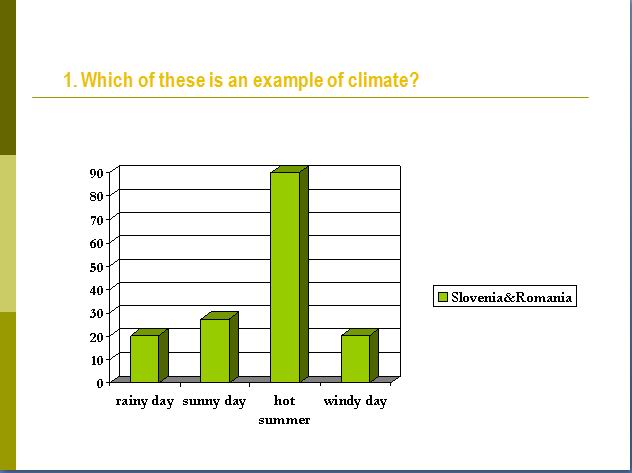
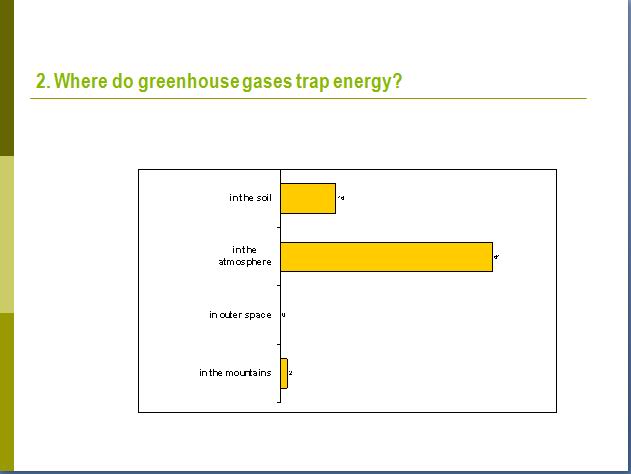
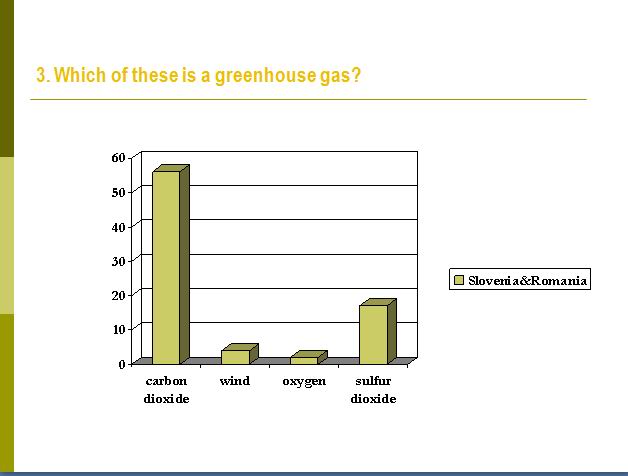
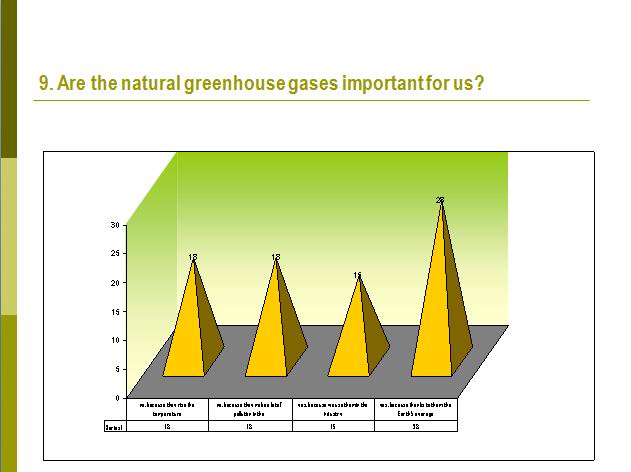
First, 90% from the students in both countries choose the right answer about an example of climate (slide 3) and 81% said that the greenhouse gases trap energy in the atmosphere (slide 4). They recognized an example of greenhouse gas because they studied this in their schools (slide 5), but only 28% answered that greenhouse gases are important for us, 36% said no (slide 11).
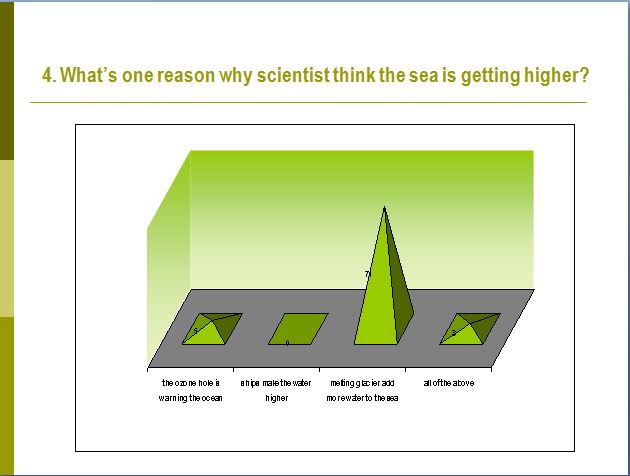
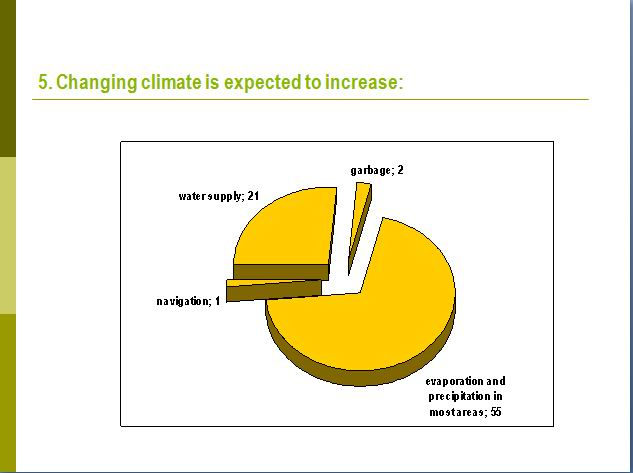
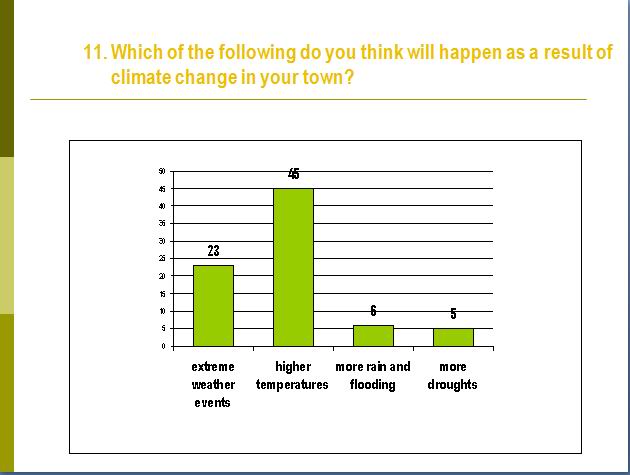
Climate change impacts will range from affecting agriculture, sea level rises because of the melting glaciers said 71% from students (slide 6), will increase evaporation and precipitation in most areas said 55% and water supply answered 21% from Slovenian and Romanian students (slide 7). Other consequences are higher temperatures said 46%, extreme weather events (22% answered), more rain and flooding 6% said and more droughts 5% of the students said (slide 13).
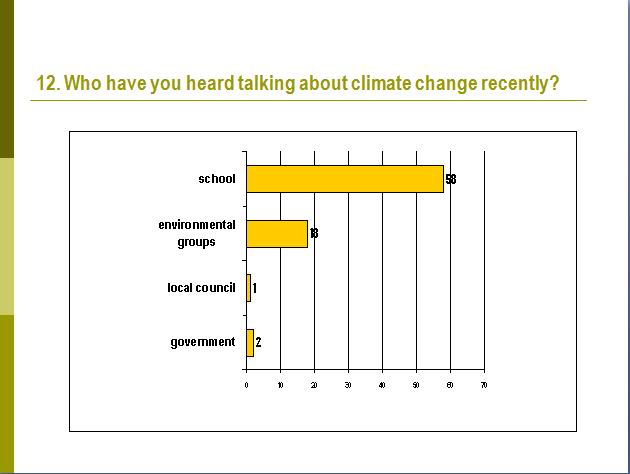
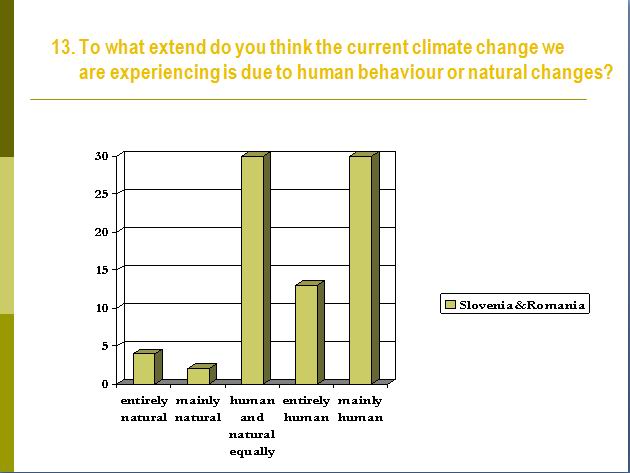
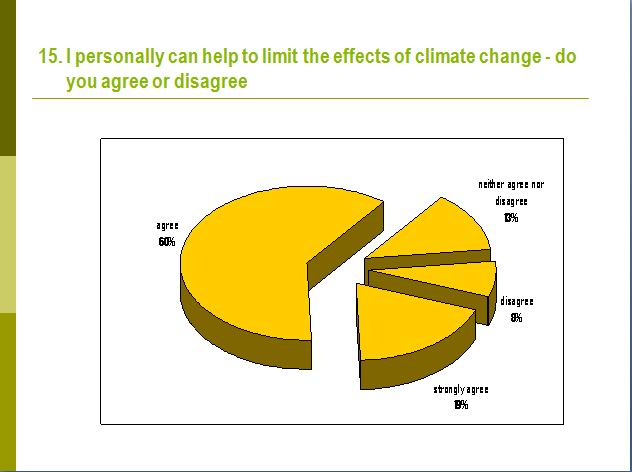
58% from students also answered that they talked about climate change in schools and only18% heard about this from environmental groups (slide 14). Serious reasons for current climate change are human behaviour and natural changes answered 60% from students (slide 15).
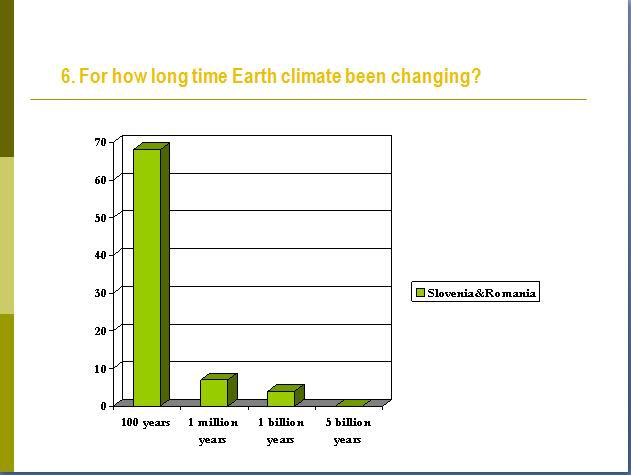
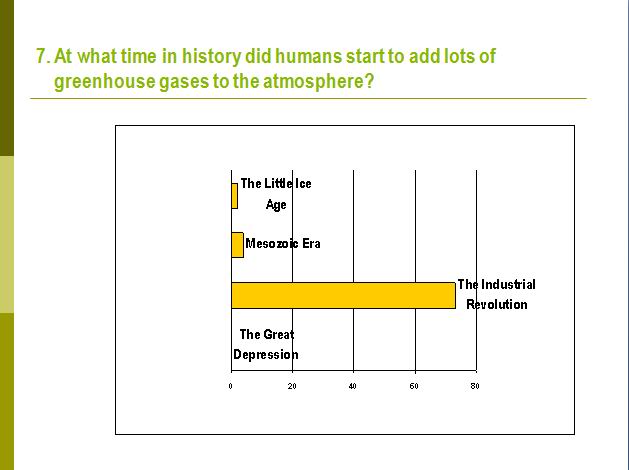
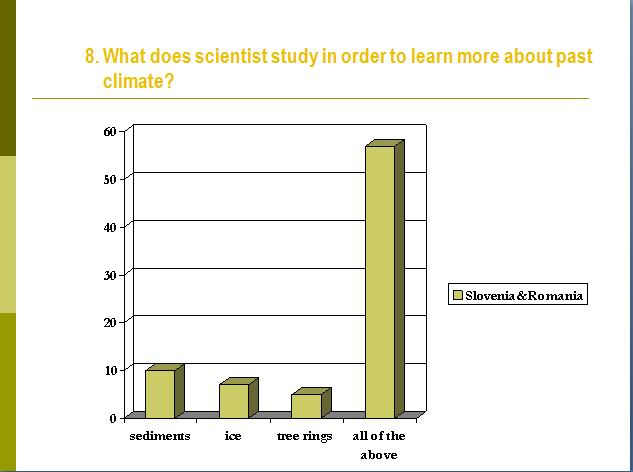
Most of the students knew from their lessons that the changes of the climate started 100 years ago, especially in the period of the Industrial Revolution (slides 8 and 9) and that the scientists are studying sediments, ice tree rings to learn more about past climate (slide 10).
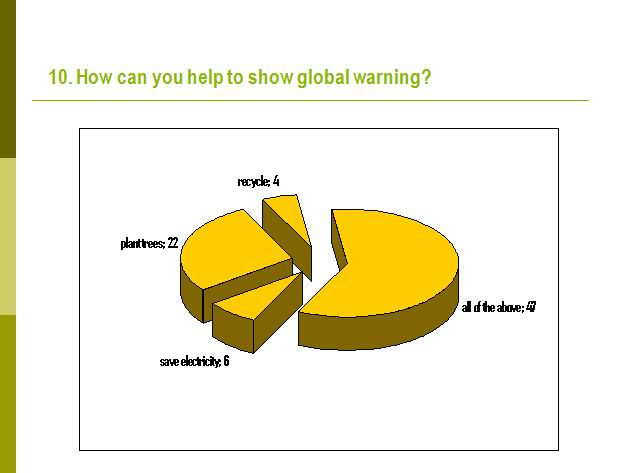
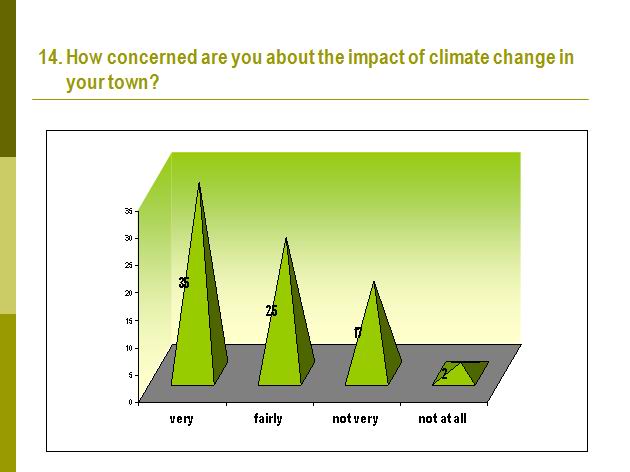
The question is therefore not whether climate change is happening but what to do about it. Both Slovenian and Romanian students are concerned about the impact of climate change in their town (50%) (slide16) and 60% from students want to limit its effects (slide 17). So all of them answered they wanted to recycle, to plant trees, save electricity to help the Earth (slide 12).
The questionnaire wanted to show to the students that there are simple ways to help the nature and everybody to think of the following question: "How green are you?"